I got some good ghost stories for you for the camp fires this year. Give me 10-20 minutes here, and I will scare the shit out of you. Why? Because I understand a lot of the risks out there better than most of my countrymen, and with this, I’d like to share what is on my mind and with this – hope to inform family and friends. And…hopefully help them look at things differently and empower them.
With this, this is not a specific threat by a specific date. Tell anyone that by June 2024, the entire financial system will collapse, and you will most likely be wrong. Why? Two things – one, your definition of “collapse” can mean you are back in the stone ages, and two putting a time associated with this is also a rookie mistake I learned 3 years ago.
However, if you told someone that there is a possibility of an extremely adverse financial/cyber/solar/violence event that might create a great deal of uncertainty and turmoil in the next decade or two, and you are more likely to get someone to lean in. This is what I want to explain here. There’s a LOT of different things that CAN happen – and while any one of them might not be terribly likely in the next 6 months, of about 20 different kinds of events, ONE of them may be likely in the next 10-20 years.
Everyone knows “something” is wrong. But to come out and say, “the dollar is dead in 2024” is just wild conjecture, and I can tell you from what I have seen the last 4 years of writing about this stuff – the most important job the Fed has is inventing ways of kicking the can down the road. It’s quite staggering to me, frankly. You clearly see the deer about to be hit by a semi, and out comes $2T in reverse repo. Banks about to blow up, and suddenly there’s a warm blanket being handed to the struggling banks with assets deeply underwater.
To be honest, the days of any politician being able to run on cutting costs, is just over. No one can win today on austerity. All the right and left are now, are gangs fighting over power to give their cronies the most money with the fire hose. Our politics are so divided – mostly due to the media machine and inventing things. And, all media is sponsored by…..you know who.
But why now?
Last week, I watched the movie “Leave the World Behind” and I realized I needed to start writing this then to capture my thoughts. There’s a lot more layers to that onion than most realize. In fact – those that sort of went for the Obama race-baiting narrative, I lost a little respect for as they didn’t quite grasp the nuance there. And there was nuance. I’m going to talk about the movie here just a little before I move on, because I think this movie will capture the first 1-3 days of any kind of event below pretty accurately.

The director pulls a fast one on you, and this is the narrative many of you fall for. It’s late at night, and GH, dressed in a tux, shows up at the door and tells him he is the owner of the house. Hawke and Roberts are a white couple renting the house with VRBO or the like. It’s late at night (11:15 PM), and the power has been out in NYC for hours, as well as the phone and TV where they are. No communications. They are starting to get a little freaked, but put on strong faces for their kids. They are on Long Island – a place I’m very familiar with.
The fast one, is that at that moment, they want you to see some sort of race thing – which many of you fell for, hook line and sinker. White couple is afraid of a black man and are racist. This is the skin-deep level analysis – no pun intended. But the nuance here is GH is wearing a tux and arrived in a $300,000 car, and has evidence of his communication with Roberts. He presents himself as upper class, educated, and polite. It’s 11:15 PM, and this couple has children, asleep, upstairs.
Do you let them in? Ethan Hawke’s character doesn’t seem to have much of an issue. Roberts, however, seems against it. Again – at face value, you are to assume Roberts then is somehow racist. And maybe Hawke is just overcompensating for his racism by trying to be passive. But the nuance here is – IT DOESN’T MATTER WHAT THE RACE IS. This SAME conversation is happening with white people showing up wearing a tux, driving a $300,000 car. Kids are asleep upstairs. There’s no ability to communicate with the police. Mama bear is protecting her kids, period. There is no secret white person club that will let you in at that time because you are white. However, Hawke’s character sees the tux, and not the race, as a cue that he is safe as he realizes GH is extremely well off and with this, not likely to pose him a threat with physical violence. Usually, those who are in GH’s position have made a lot of spectacularly good choices to get there. This is what 90% of the critics of this missed. It’s meant to make the audience think about someone showing up at 11:15PM. And – you cannot communicate with anyone. The feign here is to have you think of race for 5 minutes.
Let’s assume this guy shows up at your doorstep. On a beat up Harley. Do you let him in?
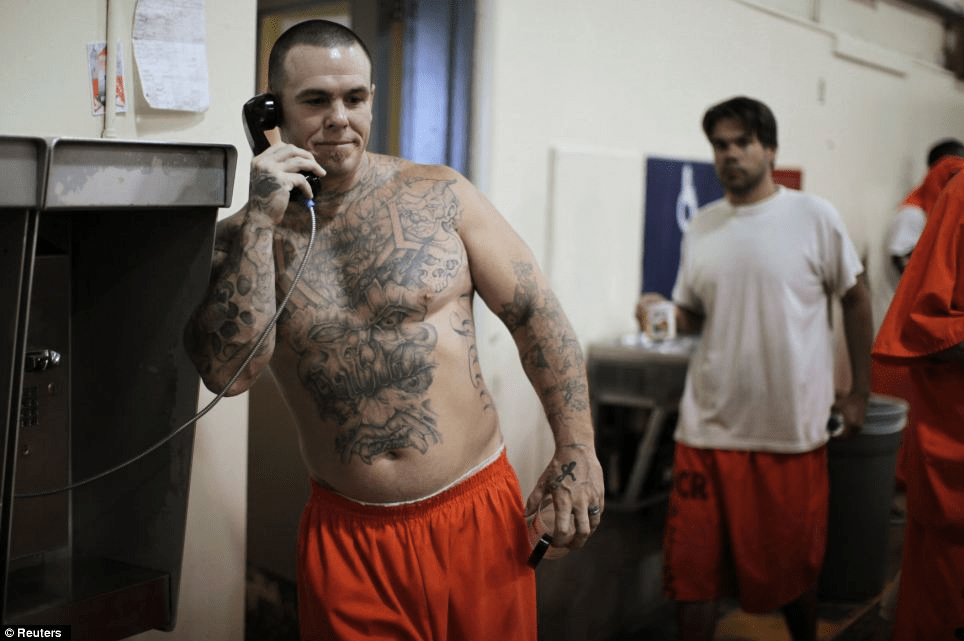
Do you let him in suddenly because of the color of his skin? No. Hawke’s character saw the tux, car, and Rolex and immediately determined there was a low risk of anything. Hawke also didn’t feel threatened by GH’s physical stature, as he was not some 6’5″ 250 pound guy.
That’s the first layer to the onion here. And what is that…..
Tribalism. What you during this initial issue is that there is a lot of confusion. No one knows what’s going on, so you have the white family sticking with themselves, and the black family sticking together. It has nothing to do with skin, and more to do with kin. During any initial issue like presented in the movie – what do you do? You take stock of your pack. Your tribe. Your family. You try to reach them on the phone to make sure they are safe like GH trying to call his wife.
The movie did a great job here with nuance showing that you are trying to protect your pack. But quickly – when you do let someone in, they will become allies. They will make you stronger as a unit. We see this as the movie unfolds – walls are torn down as the couples get to know each other, but as time goes on, more panic is setting in as to what is going on in the world. Hawke’s character is rather useless in this situation – he is a professor in NYC. Roberts early on in the movie turned down Hawke’s flirtation – almost annoyed by it, and she sort of has an awkward moment with GH. He has knowledge about what’s going on. He’s calm. Hawke is losing his shit. Again – this isn’t about race, it’s about the character’s backgrounds. Hawke as a NYC professor probably doesn’t make a ton. They live in the city, and Roberts’ character booked an expensive AirBnB – tells me she is the bread winner, and possibly the decision maker with them. This is also why her guard is up when GH first arrives. But you can see how Hawke and GH then bond together to get antibiotics from Bacon.
Fear porn
But this movie kicked the tires on my fear porn. I have always loved post-apocalyptic movies of sorts. It’s not so much that I want things to happen like that, but I’m curious how society re-organizes and rebuilds – and I get a certain sense of calm by trying to run through the scenarios in my head to try and ensure I have a plan to be safe. ”Dystopian future” movies. What this movie tickled was the “cyber terrorist” aspect of it. I have a master’s degree in cyber security, and worked under US CYBERCOM forever. I also have a top certification in a CISSP, and have the more entry level Security+. I’ve managed cybersecurity teams in some respect for 15 years.
I didn’t work on anything in the DoD that would have men in suits coming to my house to escort me away, but I understand the efforts it takes to secure large enterprises, and then I laugh at what most of the private sector does and think that is anywhere near adequate. The key here is you just don’t talk about fight club. Staffing levels, org, methods, practices, etc. But you know enough about this world around you, that you are aware of vulnerabilities and methods 99% of the people out there just don’t think about.
Most companies think of cyber security as a nuisance or a cost center, but don’t realize probably every nation state with cyber capabilities has compromised them many times over, and probably have active hooks in them somehow. Why, oh why wouldn’t they just blow us up? A 2009 book called “Cyber War” by Richard A Clarke gave some insight – it’s called Mutually Assured Destruction, or MAD.
Clarke’s book goes on to talk about nations’ cyber offensive and defensive capabilities. It wouldn’t surprise anyone, but we have a very strong offensive capability. When I interviewed for a direct commission position with US Cybercom in 2019, it was for more of an offensive type of position. My specialty for many years was securing large enterprises. But just because someone HAS a nuclear weapon, doesn’t mean they will use it on us, because that means we would return volleys and – have mutually assured destruction. Most cyber events that we know about in the public sector have to do with things like Russia going into Estonia or Georgia in 2007/2008 and disrupting their communications and just driving tanks right into the countries without a shot fired. Rumor had it we used a form of radar spoofing to trick Iraqi radars into not seeing our planes, allowing us to bomb without getting anti-aircraft weapons fired at us. I also read an account where we hacked the Iraqi secret computer network and told them to surrender.
Meaning – most of what we have seen and know about in the public has to do with cyber offensive capabilities to complement “kinetic war”. But it’s not always like that. Consider the Stuxnet virus, which was reported on in 2011 regarding a virus that somehow made it into an Iranian air-gapped network, and messed with the Siemens controls to spin centrifuges much faster than they were showing on the monitors. This was burning them out at crazy rates, effectively halting their ability to enrich uranium. As reported in that series, apparently a Siemens controller board had a chip replaced in transit somewhere in the UAE. So there are uses out there of cyber attacks. But in the case of Stuxnet, there was no loss of life.
What happens if cyber incidents cause loss of life? What is a “measured response”? What kinds of escalators happen? Could a cyber war then be escalated to a kinetic war? How would disruption of the enemy’s ability to communicate would mimic what we saw in “Leave the World Behind”? Remember – we were sending $1m smart bombs to bomb caves and huts in Afghanistan. What most people have no idea of, is how vulnerable the USA is due to the number of electronic devices we have, and the connectivity we have to the internet. Meaning – there are millions, if not BILLIONS of devices that need to be secured. And – get this – a lot of these things have vulnerabilities all the time. Many of these may have exploits discovered, that can be sold on the dark web. While a vast majority of “hacking” is something called “script kiddies” – they take other peoples’ code and then use it to exploit something. They are not the people who devised these exploits. The truth is – there’s not a whole lot of people in the world that understand this at that level. And – every day, week, month – more vulnerabilities are found.
One reason for this is software is published when it’s….close to ready. What happens then is they decide to get the product out, then patch afterwards. Service packs, patches, firmware updates – you see this all the time.
But as we get more and more connected, there’s more and more and more and more devices that lead to more vulnerabilities.
Now, I don’t really care so much if your smart toaster gets hacked. I mean, maybe you can overclock something and cause someone’s house to burn down. Maybe if there are 200,000 of them, you can send code to have 200,000 of them catch fire. I don’t know. Maybe a nation can hack your vacuum cleaners and take over your home network. But this isn’t at the top of my radar. What is?
- Power grids
- Dams
- Water systems
- Air traffic control
- Waste treatment
- Oil pipelines and supply chains.
- Nuclear plants
- Hospitals
- Emergency response centers
- Satellites
- Telecommunications
- Transportation systems
Each of these has their own challenges. But I worked for Voith Siemens Hydro for 4 years starting in early 2004. During my time there – the Voith part dealt with building the turbines. The Siemens side was dealing with the control boards. When I first arrived there in 2004 or so, I was told the year before a foreign national had stolen dam plans which then may have helped in dam design for that country. I don’t know if it is true or not, just what was told to me then. I don’t want to name countries, and given that was 2003, it was at the very dawn of cyber. On day 3, a guy came in to do pen testing and everything lit the hell up. I asked him “so what are you going to do about this”? He’s like, “I just find the problems, it’s your job to fix”. That was day 3 I was there, and my predecessors left right away, with zero training. It was my first “uh oh” experience.
But later on, you start to connect the dots. If dams are put in place to have water build up, so they can let it through to create power – you then start to worry – what if those Siemens chips were replaced in transit, and a foreign country can easily turn all of the gates open and flood what is downstream? I have to be careful here – I mean nothing ill towards Siemens – and I’m VERY confident there’s air gapped networks and they have DHS level cyber security these days. However, back in 2004, it was the wild west and their company was something I had seen first hand. And Clarke, as the nation’s first cyber czar – spared no industry in his book when he talked about countries that had “logic bombs” installed everywhere in our critical infrastructure.
In 2009, I worked as a sub contractor for Lockheed when it came out that the plans for the (I think the F35) were hacked. However, it might have been the F22 – don’t remember. However, I remember the mood. This was a leading defense contractor and they were hacked?
Most of you see cyber in your daily life as credit cards being stolen or you get those notices your data was stolen. What is actually more terrifying, is that these are only the companies that were able to detect the theft. Small business in this country is what – 4 million businesses? Do you think Steve and Jane running the local ice cream shop have an idea about cybersecurity? Think about all of the drug companies that didn’t have great cyber capabilities 10 years ago – when it came out “Operating Shady Rat” had shown that countries like China had already been in most company’s networks for a decade. All of these drugs we spend billions on, they simply stole the knowledge and made knock off drugs. You are being charged $800 a pill for some condition, and in another country, they are selling them for $5 a pop. And you aren’t allowed to buy the $5 one.
So far, cyber issues have been at the fringe of society. Inconveniences. But the movie pointed out a mix of a lot of the issues I was talking about above.
What do you do about it?
One thing of note in the movie is that a neighbor of GH had prepared an expensive bomb shelter, stocked with food. It was HUGE. Kevin Bacon’s character built it. But of interest, it seems the rich guy was from the city, and couldn’t get out to Long Island due to traffic jams, lights out, and presumably no way to get out there. This then tells you – your bugout place needs to be at least “close enough”.
I have written a lot about gold and silver. That is insurance against the dollar issues. Let’s back up. Insurance?
When you deal with risks, you have a “likelihood” and “impact”. So, what the hell do you do about anything? AATM – you can “accept” the risk, you can “avoid the risk, you can “transfer” the risk, or “mitigate” the risk. When you TRANSFER, it’s like a risk of driving your car. You pay money and if there’s an accident, your insurance fixes your car. The risk you have there is transferred to a third party. If you live in the US, and see a hurricane is coming – you can AVOID that risk by getting out of the state. Or, maybe you live in Tennessee and see the storm cone is unlikely to hit you, so you shrug your shoulders and ACCEPT the risk. Maybe you live on the coast in Florida and MITIGATE the issue by going to the Home Depot and buying 4×8 plywood boards to board up your windows.
The thing here is – you need to identify ALL risks. It doesn’t mean you mitigate all of them. Maybe you AVOID a hurricane risk by never moving to Florida in the first place. What you find with ALL KINDS of these risks, are similar types of strategies.
What you probably do NOT want to do is sit up all night panicking about all of this. What helps me is to be able to constructively and proactively address some of these risks. It doesn’t mean I build a $200,000 bomb shelter in my basement, but it might mean that I stock up on extra food.
The risks
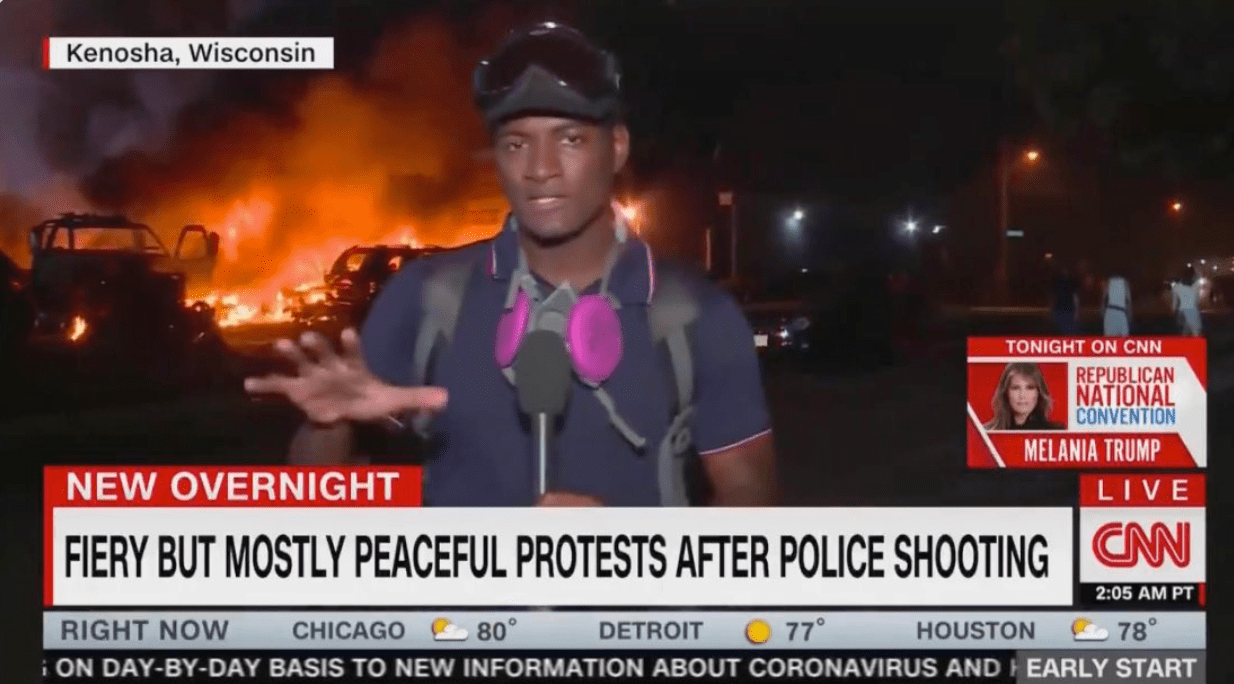
In the above, we talk about a cyber attack that essentially disrupts the nation. This is not a non-zero event. It might be a 1% chance of happening in 10 years. So, at face value, you say “I’ll probably be dead before any of this happens, so maybe I just accept the risk”. But there’s a lot of turmoil as well with the elections. Both parties here are really at each other’s throats. Remember summer of 2020 where riots happened all over the country and it seemed no one was arrested due to “mostly peaceful protesting?”

What you see is racially charged items meant to divide the country. I see breakdown of law and order, and with this, you start to wonder at what point mobs angry at some court decision, some election, or some other thing start to come to MY neighborhood to let out their anger – with no police to come. If you think being armed in this situation would help, you are probably wrong because there may be 5,000 people around your neighborhood trying to burn your houses down. Maybe you get 10-30 of them. But they have you surrounded and your house is on fire.
Then you think about things like sunspots disrupting communication. A Carrington event supposedly happens every so many hundreds of years, and while we’re not due anytime soon, there can be flavors of this that completely take down the electronics of countries.
What if the 2024 election doesn’t go your way? Will we see repeats of the summer of 2020 on steroids? Will we have states like California not arresting anyone stealing from you? What kind of violence can we expect, and how to we deal with it?
On top of all of this, you have my country now at all time highs of credit usage. There’s risk of currency collapse – either from a massive deflationary event on an extraordinarily high number of defaults, or a stellar inflationary event where the dollars you have in your bank account lose spending power virtually overnight. Let’s not forget about how banks can simply deny you your currency.
Most recently, I saw a documentary on “The Great Taking”. Much of this seems plausible. However, I couldn’t find a lot on this guy, so don’t know how well known he is – he could just be some guy who took sticky notes and yarn and started tying things together. I have heard of the risks of banks taking control of your stocks, but this more or less put out a detailed map of how the world’s elites will steal your wealth. I pointed out to someone on X that my country has 400 million guns, and the likelihood of this playing out without massive riots is silly.
Any event you can name starts running into lots of the same types of situations.
- You may not have enough “money”. For purposes of my asset theories, I count things like sugar, coffee, canned goods, dry goods, medical supplies, frozen beef, wood, gold, silver, etc as money.
- You may not be able to protect yourself against small groups of invaders. Weapons can help
- You do not have any kinds of plans to address energy needs. Phones, radios, refrigeration of food, pumping of water.
- You have no plans on how to get your own food. Fishing, hunting, etc.
- You have no means of quickly relocating somewhere, remote, to remove your family from danger
- You have no network of people you can rally with in case of bad things
- You have no remote supplies if you have to get out of your house in 30 seconds or less.
This list can also go on forever.
But what do you DO about it?
I think everyone first and foremost needs to understand WANT versus NEED as the starting point to EVERYTHING in life. IF you have NEEDS taken care of, THEN you can focus on WANTS. This is the poison of our society today, and the root of the rot in my country. These things take care of themselves in severe deflationary events. Today, it’s about the latest electronic gadgets for our kids, and tomorrow it’s scraping nickels together from the couch cushions to buy a bag of rice to feed your family.
If you look at things through this prism, you start to understand that WANTS are endless. I think most families today fall into these traps, especially with regards to social media. Someone gets something, and you “covet” it, and want it for yourself. Or something better. At some point, you realize that no matter how much money you make, the endless desire for wants can never be quenched. In this case, money cannot buy happiness because if you walk through life like this, you are always at a deficit of what you THINK will make you happy. Something you do not have. You spend your hours wanting this, and when you get it, you have a brief moment of happiness, and then on to the next want.
If you flip the script here, and look at what you NEED, you can then start to live a more fulfilling life. You NEED food. Water. Shelter. Safety. Belongingness. You do not NEED a new deck. You WANT a new deck. But have you properly secured your family?
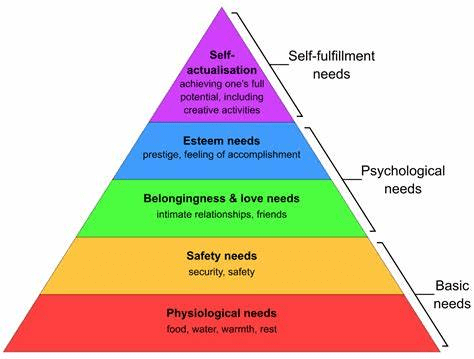
What I feel like is many who have the family, the careers – are in this endless need of WANTS in the blue. However, with what I’m talking about above, many have skipped over the first two and completely take them for granted. Imagine having $2000 in your bank account. Tomorrow, your bank is hit by a ransomware cyber attack, and you cannot get access to your money. Maybe the virus hit the power company and your refrigerator is not powered. What if you have no food in the fridge. Many of you then have credit cards that can work. But what if the entire Visa/Mastercard/Discover networks were attacked? You have no physical cash. The POS registers at grocery stores may be down. OK….so it might make sense to always have a few weeks of food at home with dry goods and frozen foods?
When you start looking at the unending numbers of risks out there, you start to change your mindset from WANTS to NEEDS.
The RV-truck-home debacle
About a year ago, I started looking for RVs, or the trailer you pull. Campers. Travel trailers. I knew nothing about them. When I was a kid, we camped in tents. A lot. I loved it. And it was dirt cheap. But – I WANTED a camper. The tent for me is a distant backup just because the concept of a tent in 20 degree northeast weather is kind of silly. But my NEED is for a secondary shelter.
I started to look at these, and they are on fire sale – too many produced due to inflation demand, then credit seized and now they are in overabundance at dealerships. But I then started to look into my truck, and found it could only haul 8300 pounds. I WANTED (not needed) a bigger trailer. But trucks were at all time highs last year, and I wasn’t going to buy a $70,000 truck to pull my RV.
At the same time, I started a search for raw land and tried to learn all I could about it. Easements, landlocked land, drilling for water, septic, power. It’s a LOT to understand. I put that on ice when I stopped with the RV.
The wife started talking me into a deck/patio roof. And, I sort of got seduced by it to entertain people. But this starts to add up, and then you see a possible pool coming – and I’m now looking at possibly $150-$200k being put into this house over the next few years (borrowed), perhaps maybe only getting $40-60k back if I have to sell. This started giving me great pause. I saw the movie a few weeks ago, and started to remind myself that I don’t need a deck. I want one. I need to secure my family first.
NEEDS vs WANTS
So I started looking for perhaps a remote house in the middle of nowhere with some land months ago, a stream, etc. Found one. Made a bid. Was outbid and lost it at the last minute. Dammit!! The supply of houses for what I wanted – pretty inexpensive – are just not on the market. So many people have low mortgage rates, no one wants to sell their house to buy a house that costs twice as much at 8% rates.
So I still have a NEED for a secondary location – you will see with my risk analysis below. This past week, I upgraded my RAM 1500 to a 3 year old used one that has the 3.92 axle ratio I need so I can pull 11,500 pounds. Now I can pull a camper I want – but to where? You can get a lot of these campers 4-5 years old for maybe $10k financed, so it’s a relatively cheap payment to buy. So land is still now in the conversation – but like homes, I’m not finding anything I want relatively close to my house (1-2 hours away). There’s a LOT of stuff in south NY, but remember “Leave the World Behind” above where people could not get to their secondary location? This is what you risk many hours away. I don’t want something 3-4 hours away.
Part of me now is shopping for a tent in addition to keeping an eye on the RV market. I haven’t ever hauled an RV, and this is something of significant trepidation for me. You buy it, you have NEVER hauled before, and they just expect you to take it off the lot? Scary…
Risk matrix
When I was 23, I made my first risk management plan for EDS when I worked at the Vanguard Group of Mutual Funds in King of Prussia, PA (that’s the location of the data center and where I witnessed the 9/11 attacks on TV). Doing the risk plan was enlightening, and with it, I have used this type of tool in every aspect of my life. Many people just avoid risk altogether, which is a terrible way of going through life (my mother). Others, ignore all risks and just accept them with no plan at all (my dad). I’d posit that those who are in the best positions in this country are people who are informed risk takers, that were able to understand risks and appropriately plan for them. They have plans to deal with risk. They may not be perfect, but they are informed and well thought out.
For example – if you feel there’s a risk of hyper inflation, you have precious metals with you. This is the risk that is addressed by TRANSFER. PMs thus are insurance against currency collapse. But what is the likelihood of this? 5% in the next 10 years? 20%? 1%? It makes sense here to be prudent with your insurance and not buy 60,000 oz of silver betting on a doomsday of currency that may never happen.
But if you start to lay out events, and risks, you start to see the risks for a lot of these events overlapping. Here, I just did a simple risk analysis of a few items, and you start to see repetition.

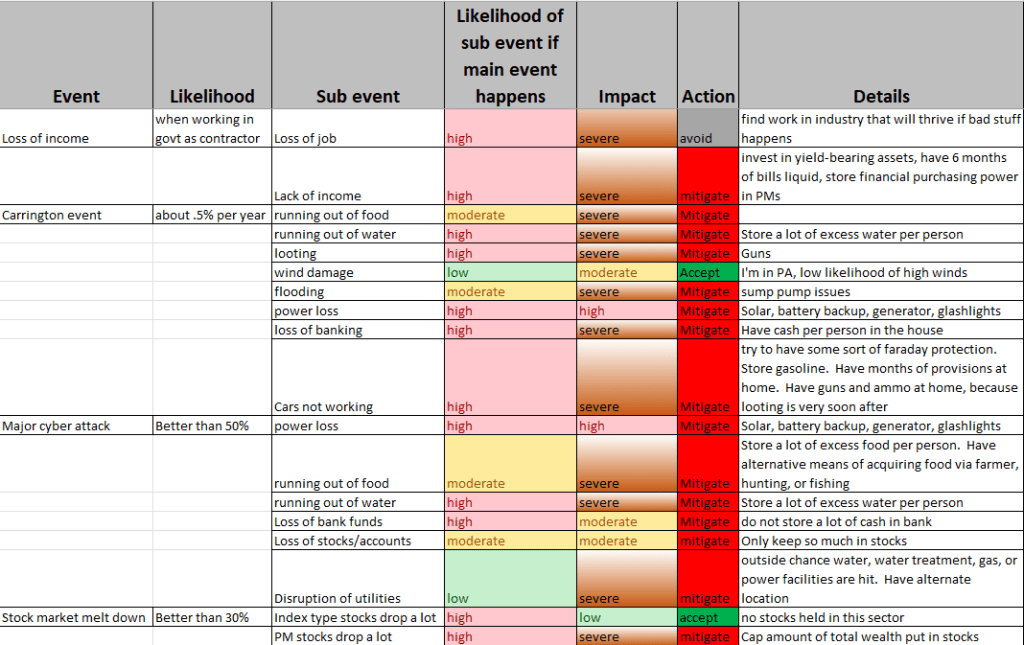

So – is the dollar dying next year? I don’t think so. Are we going to have a Carrington event in the next 10 years? Not likely. But you start to go through all of this, and start to think of if ANY of this can happen in the next 10-20 years, you start shitting your pants. Why? Because none of us are really prepared for all of this, or even a portion of it. But these risks then point out a plan I started in 2019. Just think of the unknown-unknowns, the Black Swan events. Could any of that happen in the next decade or two? Sure.
You can then start to develop items “to do” and gauge where you are. For example…


Conclusion
I want the reader here to start to look at the possibilities of SOME SORT of negative event happening in the next 10-20 years, then thoroughly review your risks, and if you have exposure. Talk to your accountants, financial advisors, even your insurance people. Maybe you have an uncle with a big cabin in the woods and he has no children, and your plan is to go there. GREAT! I don’t have that. So you might be fine to get that deck. But most people I know really only have 1-2 weeks of food in their house. I’m hoping by this, you might consider storing more dry goods, canned/packaged goods, and even get a freezer to store meats in.
I didn’t even consider talking about the 4th turning here, and how the impact of all of the Greatest Generation dying off, means we are doomed to repeat mistakes of 80 years ago. And – it appears to be happening. Just as violence started in the 1930s, violence is erupting all over the world today. Our country may tear itself apart in the next few years due to identity politics, and let’s not even talk about how voting might go in 2024. That is to say, maybe there is another plandemic, or the issuance of the CBDC locks people out of their money because they posted something bad on social media. I didn’t even scrape the SURFACE on the risks to all of us in the next 10 years.
Suffice it to say, your recency bias of tomorrow will be here just fine because today and yesterday were fine needs to be understood at a deep level. Life, as you know it, could be vastly different 10 years from now, and most of my country is now just waiting for our Fall TV shows to drop since the writers/actors strike is over. Most of my countrymen are asleep. Articles like this give you insight on ways you should challenge your behaviors – to properly provide for your family.
Once you feel you are secure, then start to plan the outdoor barbecues and trips to Europe.
I hope you found this useful. For all of you out there thinking, “should I add a deck”? Start to really comprehend what I’m saying above, and think about a deck after you have a lot of this already taken care of – OR have a strong plan to try and address these risks.


 Renaissancemen.org
Leave a comment